



Fruit Tree Pruning in Saint John
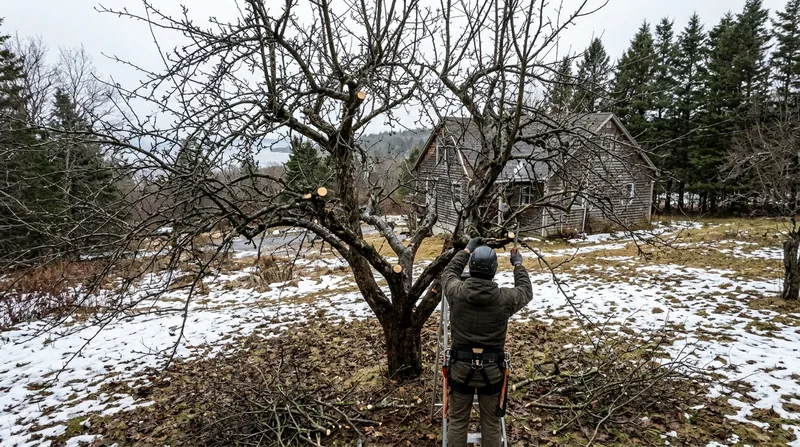
Fruit trees in Saint John face a short growing season, heavy snow loads and late-spring frosts, so the window for structural pruning is narrow. Our fruit tree pruning in Saint John crews work in late winter, while apple, pear, plum and cherry trees are still dormant, to open the canopy, improve airflow and set up a better fruit crop. We are a local, fully insured company with ISA Certified Arborists on staff, and we have pruned backyard orchards across the Saint John area since 2014. If you are comparing two or three companies, ask for the pruning plan in writing; ours lists every cut by diameter class. See our tree pruning service for the wider structural work we do.
Why dormant pruning matters for fruit trees
Most backyard fruit trees in Saint John West were planted for shade or windbreak, not for fruit, and they have the narrow crotches, crowded interiors and water sprouts that come with years of neglect. Black knot on plum and cherry is common here, and it spreads faster in a dense canopy that holds moisture after rain. Pruning in dormancy removes the knots and opens the tree before the spring flush, when spores are active.
- We remove dead, diseased and crossing branches before they rub bark and open wounds.
- We thin the interior so sunlight reaches the fruiting wood and airflow dries leaves faster.
- We cut back black knot on plum and cherry well below the visible swelling and dispose of the wood off site.
- We rebalance the crown on older apple trees that have become top-heavy after decades of neglect.
- We leave the central leader and main scaffolds intact so the tree keeps its shape for the next season.
A clean dormant prune is the single cheapest way to reduce disease pressure and improve fruit size on a mature tree.
Key fact: a mature apple tree in a Fairville backyard typically takes two to three hours of climbing and pole-saw work. A row of five to eight trees on one property is a normal half-day job for a two-person crew.
For the provincial context on tree health and invasive pests, the in Saint John and the surrounding area Department of Natural Resources publishes current advisories.
How our crews prune a fruit tree
We start with a walk-around and a look at the trunk flare, the scaffold angles and any old wounds. From there we set a pruning plan by species: apple and pear tolerate a harder cut, plum and cherry need a lighter hand because they are more prone to canker and silver leaf. Climbers work the upper canopy on rope and harness, and ground crews handle the lower scaffolds with pole saws.
- We inspect the tree for black knot, cankers, deadwood and included bark before any cut is made.
- We remove the three Ds first: dead, diseased and damaged wood.
- We thin crowded interior growth to let light into the fruiting zone.
- We shorten overly long scaffolds to keep the tree compact and pickable.
- We chip the smaller brush on site and haul the diseased wood away in a covered trailer.
- We rake the lawn and blow the driveway so the property is left clean.
Every cut is made to the branch collar with a sharp saw, and we never leave a stub that will die back and invite rot.
Key fact: a plum tree in Grand Bay-Westfield with black knot on three scaffolds needed 40 cm of cutback below the lowest knot. We removed the infected wood the same day; leaving it on site is how the fungus spreads to the next tree.
If the tree has structural defects beyond pruning, we may recommend tree cabling and bracing to hold a split crotch together.
Pruning methods we use
The right method depends on the age of the tree, the species and how much corrective work it needs. We match the approach to the tree rather than running the same routine on every property.
| Method | Description | Context |
|---|---|---|
| Structural pruning | Selects and spaces the main scaffolds over several seasons. | Young apple and pear trees in Saint John neighbourhoods. |
| Renewal pruning | Cuts back old, unproductive wood to force new fruiting shoots. | Mature trees on ravine lots with steep access. |
| Disease removal | Cuts out black knot and canker with a margin below the infection. | Plum and cherry trees across the Saint John area. |
| Canopy thinning | Removes interior water sprouts and crossing branches. | Dense backyard trees in Lower West Side. |
We choose the method after the site walk, not before, because two trees of the same age can need very different cuts.
Permits, setbacks and cleanup
Pruning a fruit tree on your own property rarely triggers a municipal application, but the City of Saint John may require a permit for a private tree removal, and an arborist report normally supports that application. Rules and thresholds differ from one municipality to the next across the Saint John area, so we check before any removal is scheduled. Our crews respect approach distances near your private electrical service entrance; any tree touching the public distribution network is referred to NB Power. Diseased wood from plum and cherry is chipped or hauled away the same day, and clean brush is chipped on site or left as firewood at your request. For a written scope before work starts, request a free estimate.
When to book fruit tree pruning in Saint John
The best window runs from late November to early March, while the trees are fully dormant and the wood is visible without leaves. Late winter, just before bud break, is ideal because wounds begin to seal as soon as growth starts. Book early: February slots fill first in Saint John West and Grand Bay-Westfield, where many properties have a small orchard or a few legacy apple trees. Avoid pruning in wet spring weather when spores are active.
Our pricing page lists the hourly and per-tree rates we apply to pruning work. For trees that have died back from emerald ash borer or storm damage, see our tree removal service; for stump cleanup after a removal, we handle stump grinding on the same visit. To confirm coverage in your part of the service area, call (506) 719-5415.
Prices Fruit Tree Pruning in Saint John — Indicative pricing
| Service | Price | Details |
|---|---|---|
| Young fruit tree, structural pruning | From $150 | Trees under 4 metres, up to 10 cuts |
| Mature fruit tree, fully pruned | From $275 | Climbing and pole-saw work, up to 5 metres |
| Black knot removal, plum or cherry | From $225 | Cut back below infection, wood hauled away |
| Orchard row, 5 to 8 trees | From $850 | Half-day crew rate, chipping included |
| Travel | Included | In Saint John and the surrounding area |
| Estimate | Free | Reply within 24 hours at (506) 719-5415 |
Indicative prices; free, personalized estimate within 24h at (506) 719-5415.